
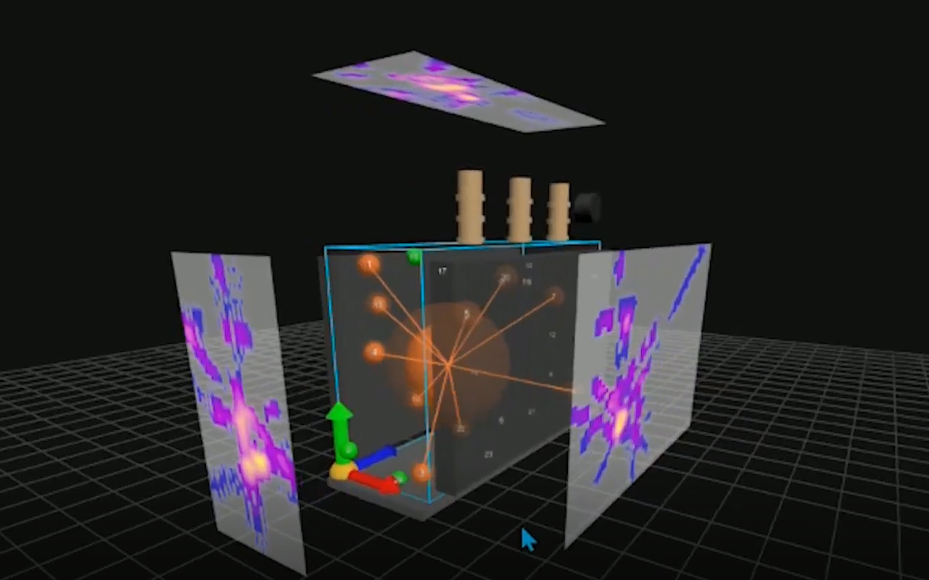
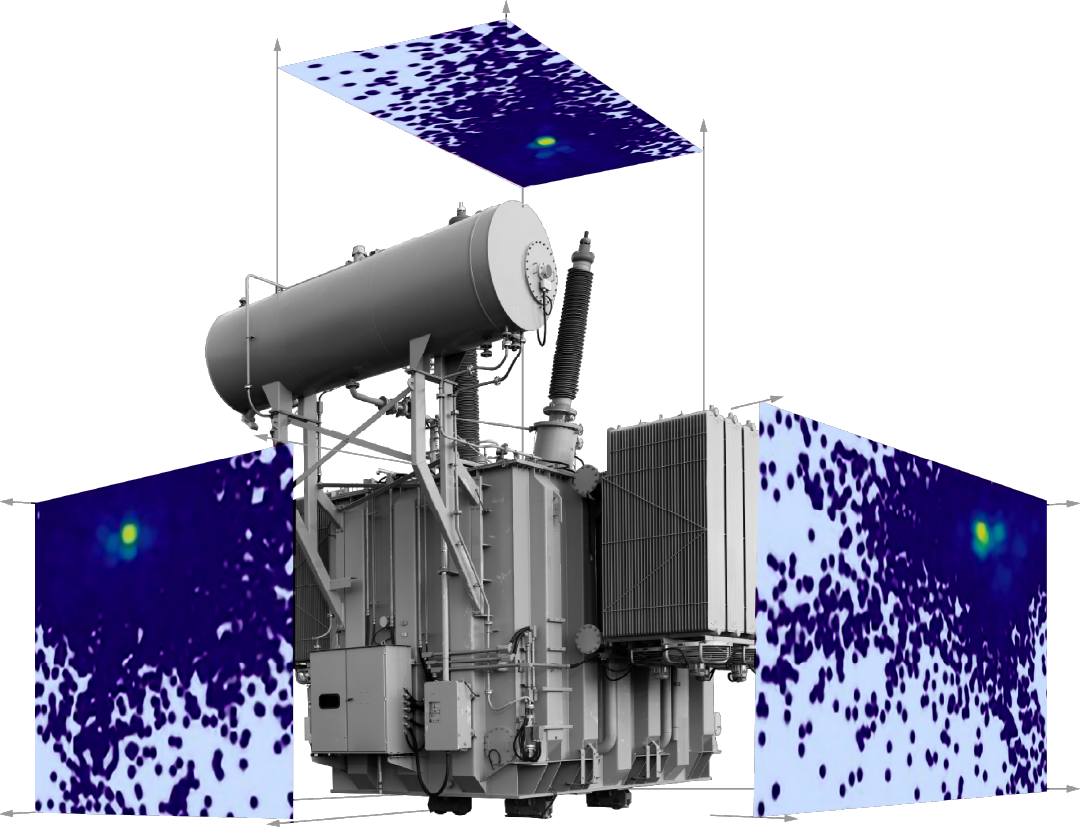
Partial discharge, found and located while the transformer runs.
OptiFinder monitors high-voltage assets 24/7 with passive fibre-optic acoustic sensors. It is in live deployment globally.
OptiFinder · formerly OptiFender
Detect faults months before they become failures
Passive fibre-optic sensors and real-time analytics detect, classify and localise partial discharge without specialist PD expertise on site. Asset managers get a clear recommendation: keep operating, monitor or intervene.
- Sensors32 acoustic sensors capture the entire transformer volume
- LocalisationUp to 15 cm accuracy, shown in 3D
- SensitivityInternal PD down to 5 pC
- RangeSuitable for remote assets, more than 40 km
How it works
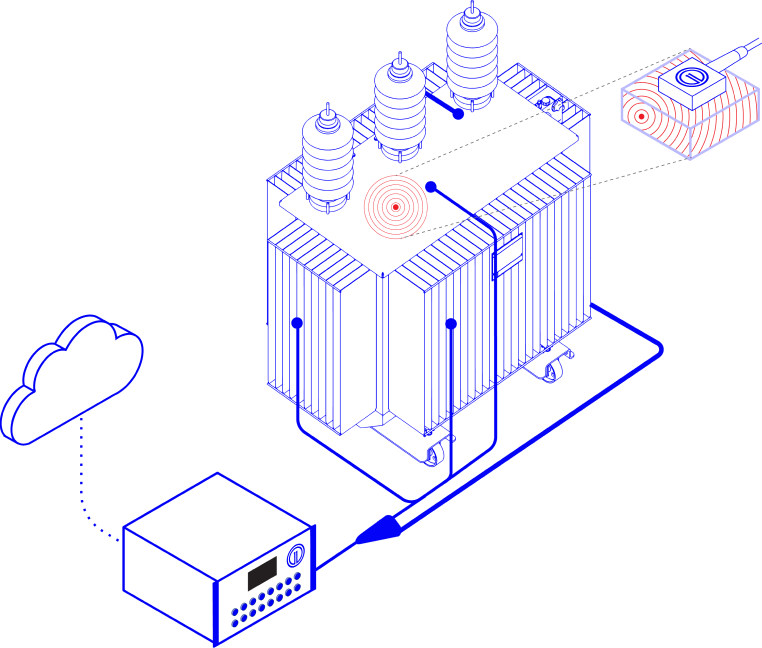
Fibre-optic acoustic sensors sit inside the transformer. A discharge sends out an acoustic pulse, the sensors pick it up and OptiFinder shows where in the tank it came from.
- No repositioningNo repeated measurements or moving probes
- InstallationWithout interrupting operations
- PowerNone required at the sensing location
- AccessRemote, from anywhere, for TSOs with widespread assets
Fibre-optic versus electrical PD monitoring
| Criterion | OptiFinder, fibre optic | Electrical PD monitoring |
|---|---|---|
| Immunity to EMI | High, immune to electromagnetic interference | Low, susceptible to interference |
| Signal clarity | Excellent in any environment | May be compromised in complex environments |
| Installation | Easy, without interrupting operations | Can be complex, may require shutdown |
| Power at sensor | None required | External power or pre-amplifiers often required |
| Monitoring range | Remote assets, more than 40 km | May have limited range |
| Isolation | Galvanically isolated sensors | Less galvanic isolation, potential safety risk |
Source: Optics11, OptiFinder vs. Electric PD Monitoring.
See OptiFinder on your own assets
For transmission and distribution operators, generators and transformer manufacturers. Book a demo session with the energy team.