
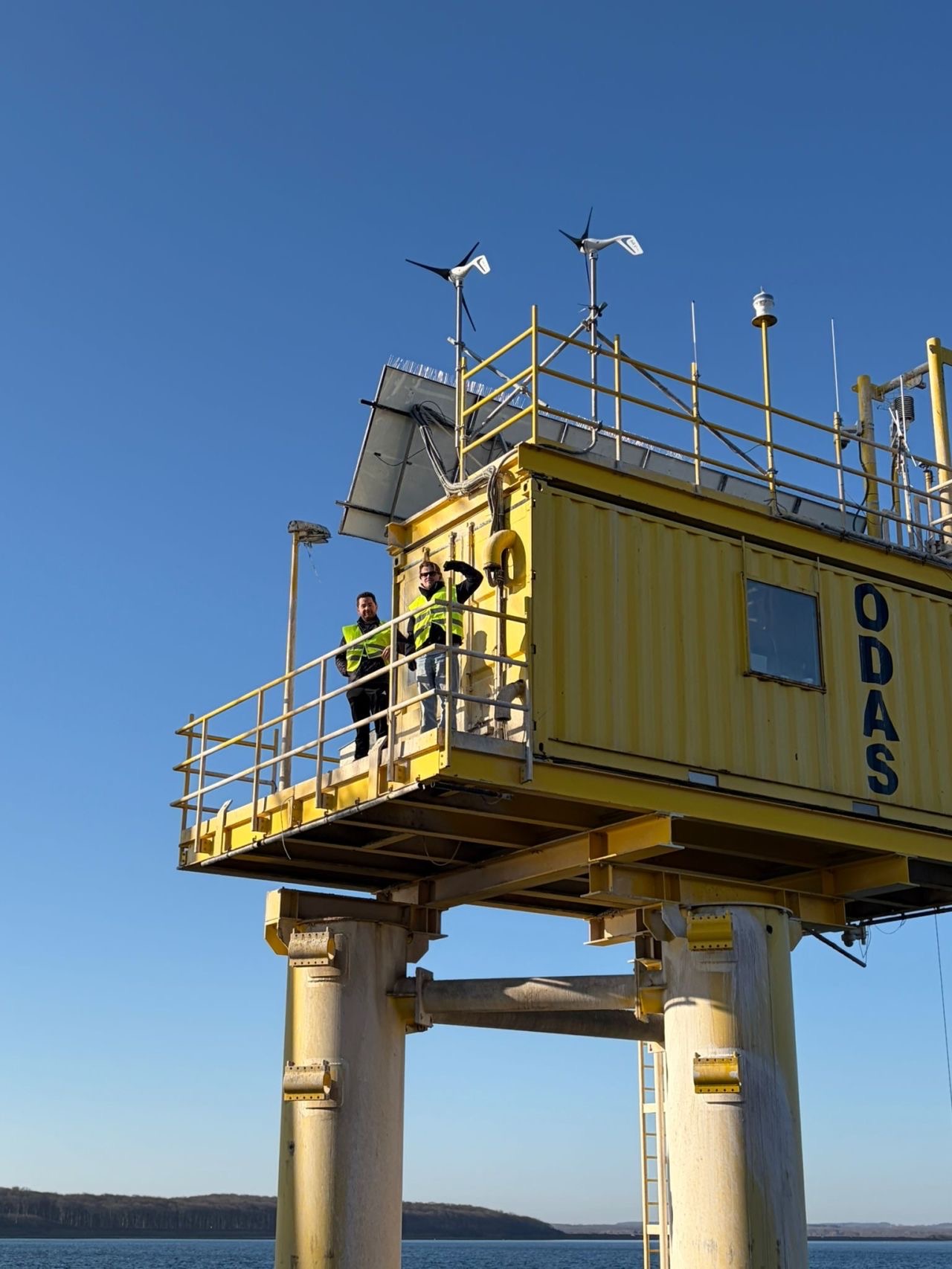
Persistent awareness on the seabed and behind the ship.
Passive fibre-optic acoustic sensing for navies, coast guards and operators of ports, offshore energy and subsea cables.
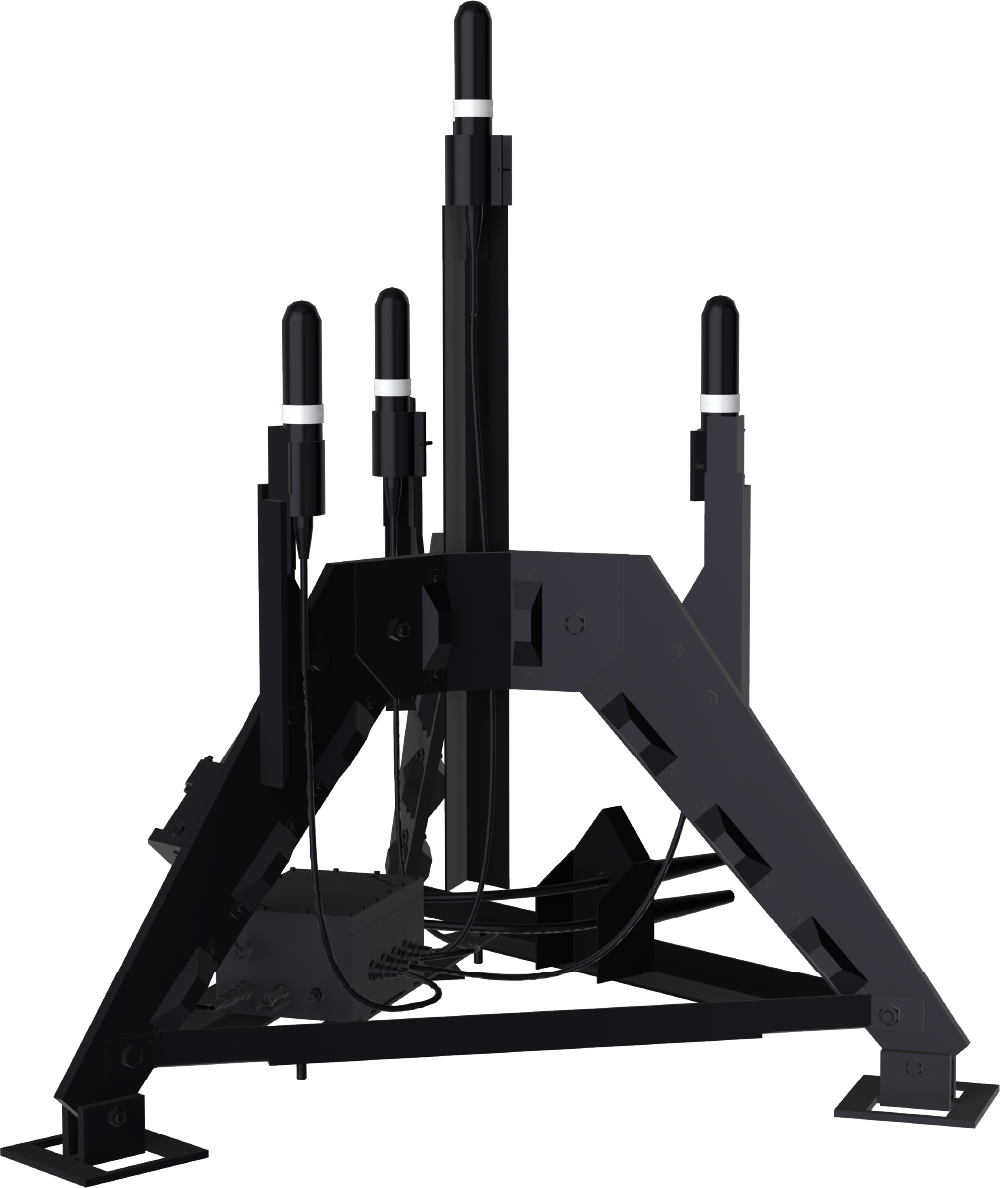
An early-warning grid that stays on the seabed
OptiBarrier is a modular fibre-optic seabed curtain. It forms a persistent early-warning grid around harbours, wind farms, pipelines and cables, and streams real-time acoustic data to your command system so operators have more time to respond. Engineered in the Netherlands.
- RangeDetects and classifies targets up to 100 km from the shoreline
- Wet endNo electronics in the water, intrinsically immune to EMI
- Coverage24/7, over the horizon
- TestingFirst offshore test centre opened in Rostock, Germany
OptiArray: a thin-line towed array for submarines and uncrewed vessels
All-optical, low drag and low power. It scales to large channel counts and streams clean, real-time acoustic data for detection and classification.
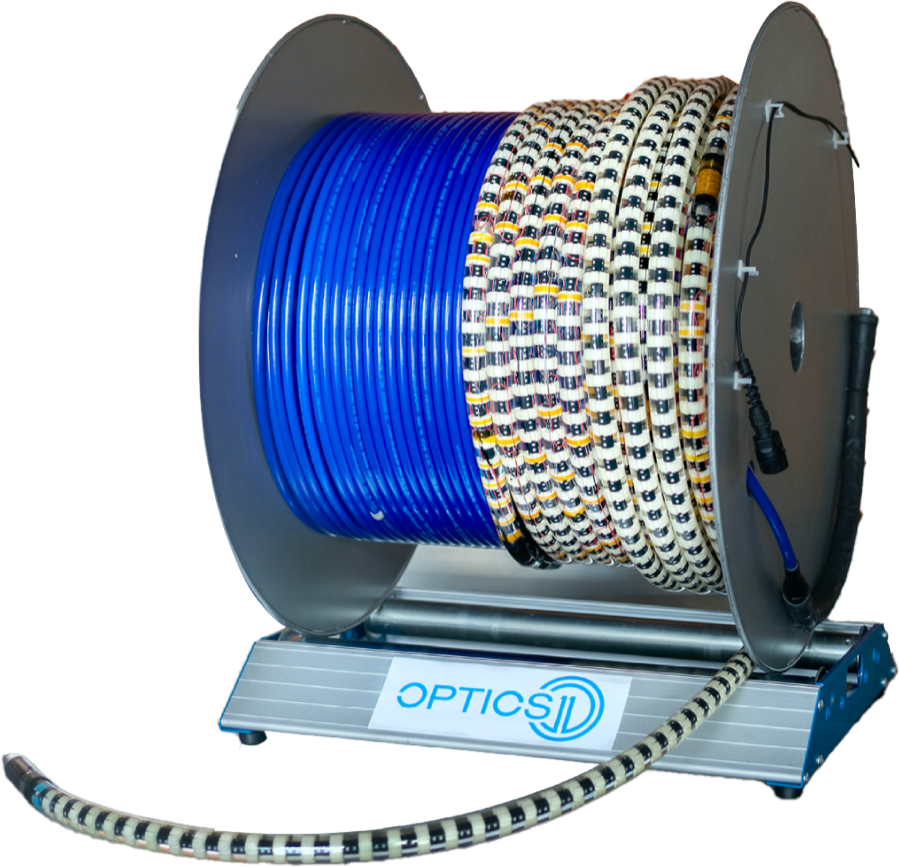
High-sensitivity passive anti-submarine warfare
A compact, low-power thin-line array that brings passive ASW to submarines. Immune to EMI, with a design that scales to large channel counts.
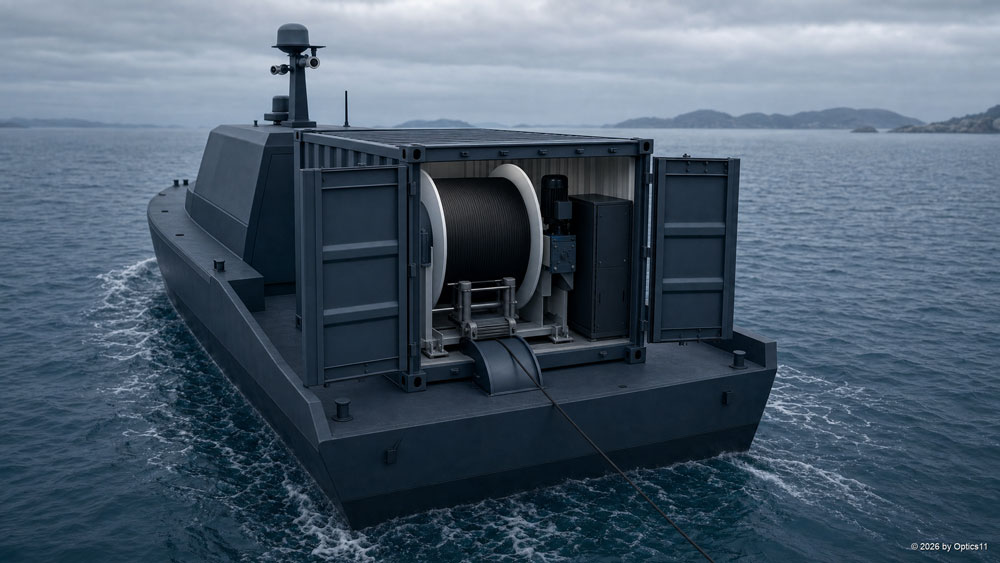
Wide-band listening that preserves endurance
A low-power, winchable thin-line array for USVs, UUVs and XLUUVs. Optical multiplexing adds hydrophones without a proportional power cost, and data goes to onboard or mothership processors.
- ASWINABOSelected by the Dutch Ministry of Defence for Anti-Submarine Warfare In A Box, a containerised capability for crewed and uncrewed surface vessels, including civilian ships
How it works
The technology comes from photonics research at Vrije Universiteit Amsterdam. Light captures minute acoustic signals instead of powered electronics at the sensing point.
Sound reaches the fibre
A vessel or a dragged anchor creates pressure waves that put tiny strains on the optical sensors.
Light changes
The interrogator reads the change in the light and turns it into an acoustic signal with a position.
Operators decide
Detections and classifications stream in real time to the command system you already use.
Talk to the underwater security team
For navies, coast guards, port authorities and operators of offshore energy and subsea cables. Requests are handled under the confidentiality your programme requires.