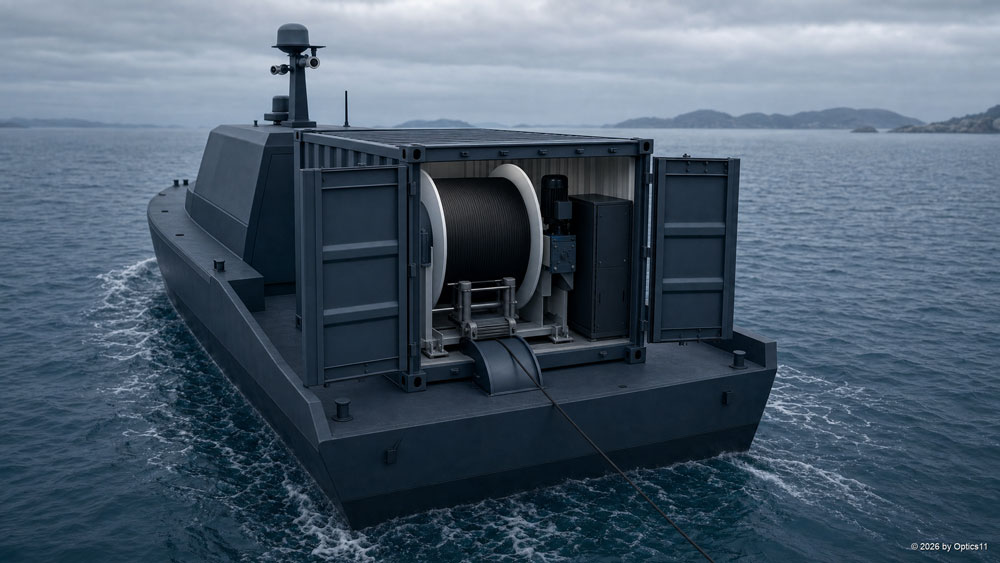
We listen with light where electronics can't go.
Optics11 builds passive fibre-optic acoustic sensors for underwater security and high-voltage grids. A spin-out of Vrije Universiteit Amsterdam, founded in 2011.
One fibre, from the seabed to the substation.
The fibre
Light runs through an optical fibre on the seabed. Sound and vibration put tiny strains on it, and the change in the light tells you what happened and where. Nothing in the water needs power.
A vessel above the cable
Propeller noise reaches the fibre as a pattern of its own. OptiBarrier detects and classifies targets up to 100 km from the shoreline.
An anchor dragging toward it
A dragged anchor sounds different from passing traffic. Operators see the position along the fibre and get time to respond before the cable is hit.
Partial discharge on shore
The same principle listens inside a high-voltage transformer. OptiFinder hears partial discharge and locates its source with up to 15 cm accuracy.
Illustration drawn in code. Event types follow Optics11 and press descriptions; positions are schematic.
Underwater security for ports, cables and navies
Two products share one sensing core. OptiBarrier stays on the seabed around fixed infrastructure. OptiArray goes to sea behind a submarine or an uncrewed vessel.
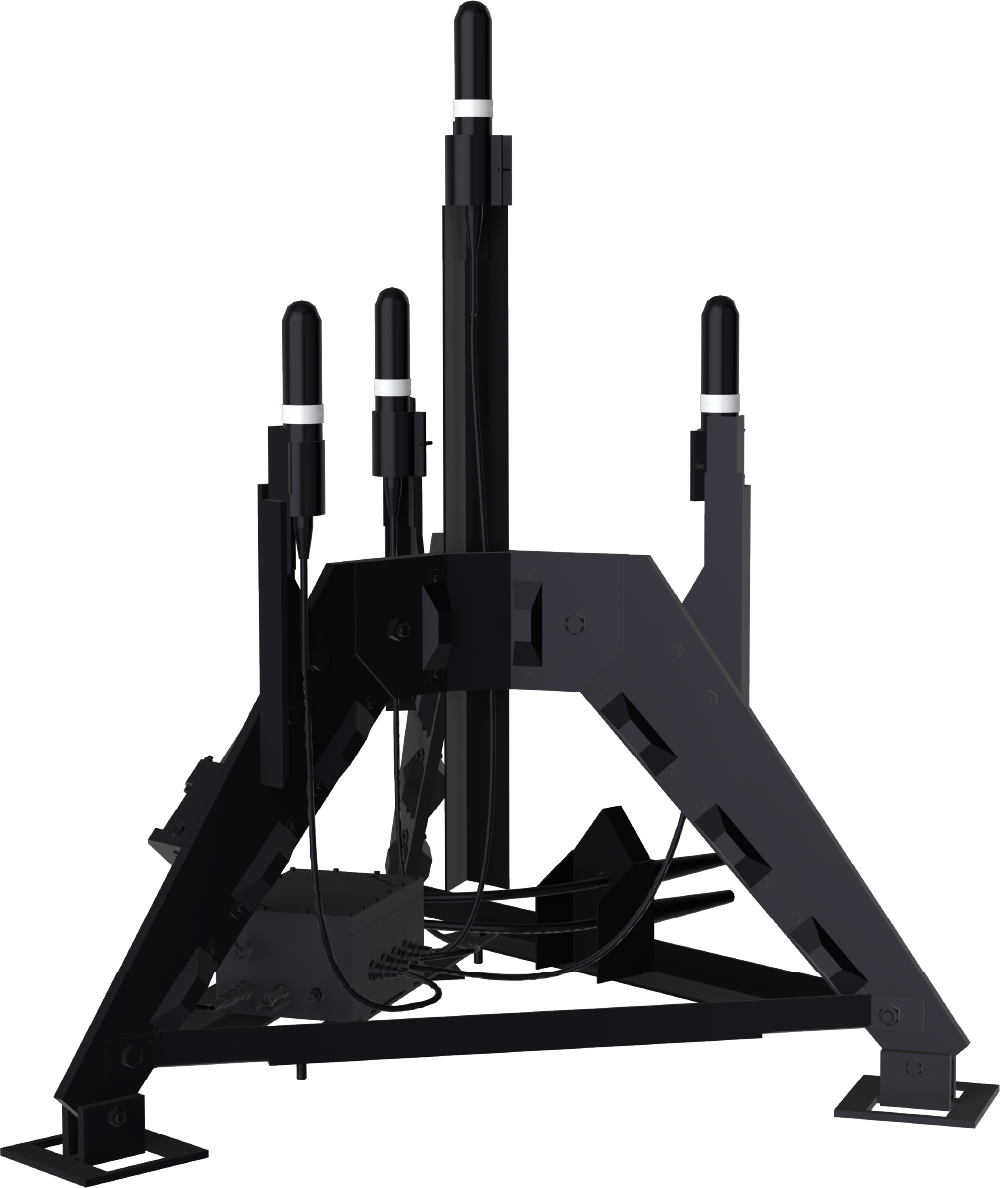
A fixed listening line around harbours, wind farms and subsea cables
A modular fibre-optic seabed curtain forms a persistent early-warning grid. Real-time acoustic data streams to your command system.
- RangeDetects and classifies targets up to 100 km from the shoreline
- In the waterNo wet-end electronics, intrinsically immune to EMI
- ProtectsPorts, offshore energy infrastructure, subsea cables, pipelines
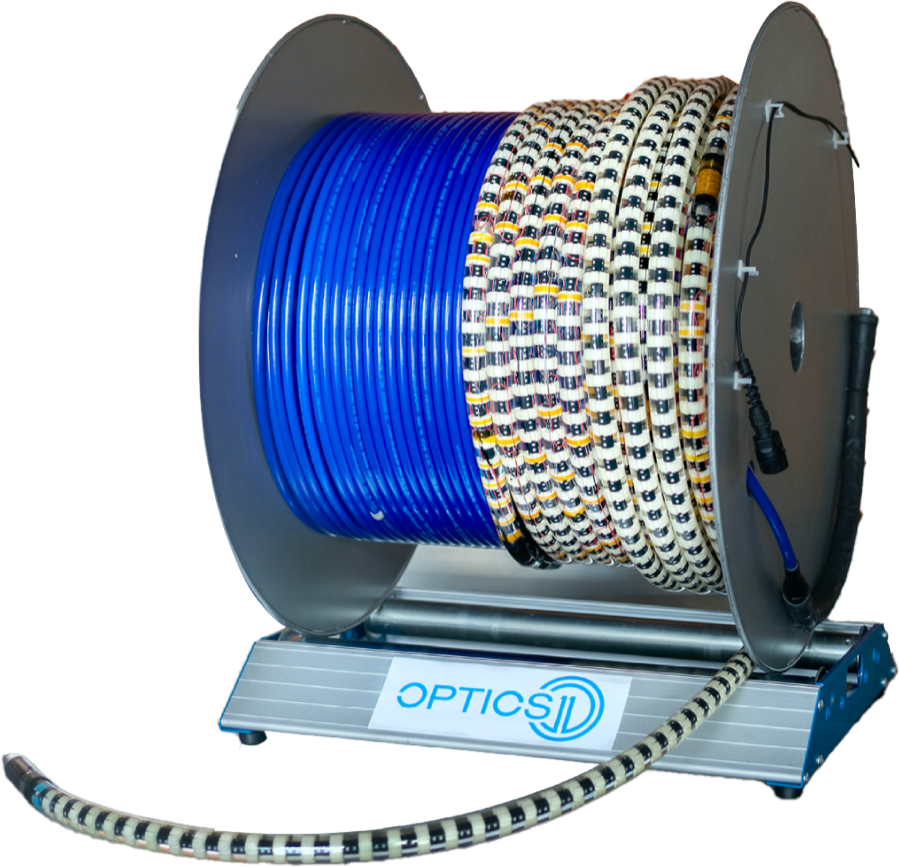
A thin-line towed array for submarines and uncrewed vessels
All-optical, low drag and low power. Optical multiplexing adds hydrophones without a proportional power cost, which preserves endurance on USVs, UUVs and XLUUVs.
- Selected byDutch Ministry of Defence for ASWINABO, Anti-Submarine Warfare In A Box
- Deploys fromA broad range of crewed and uncrewed surface vessels, including civilian ships
Protecting a port, a cable route or a fleet?
Talk to the underwater security team about OptiBarrier and OptiArray. Conversations are handled under the confidentiality your programme requires.
Energy: hear a transformer fault months before it fails
OptiFinder monitors partial discharge 24/7 with passive fibre-optic acoustic sensors inside high-voltage assets. It is in live deployment globally.
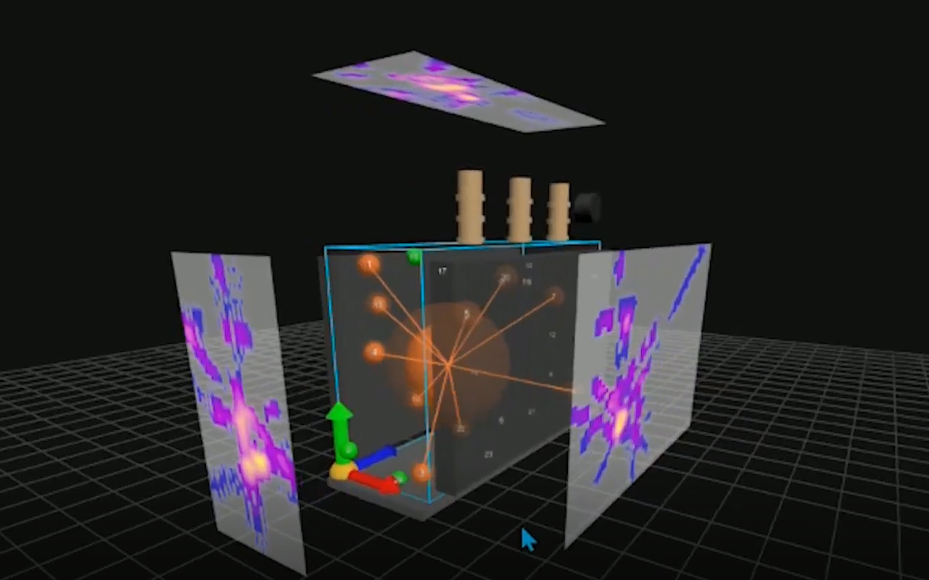
From a detected discharge to a maintenance decision
Sensors capture the whole transformer volume, so nobody repositions probes or repeats measurements. Analytics classify the discharge and recommend an action.
- Sensors32 acoustic sensors cover the entire transformer volume
- LocalisationSource of PD pinpointed with up to 15 cm accuracy
- SensitivityInternal PD down to 5 pC
- Operation24/7, remote, EMI-immune, maintenance-free
Run grid assets for a TSO, DSO or generator?
See OptiFinder on your own transformer type in a demo session with the energy team.
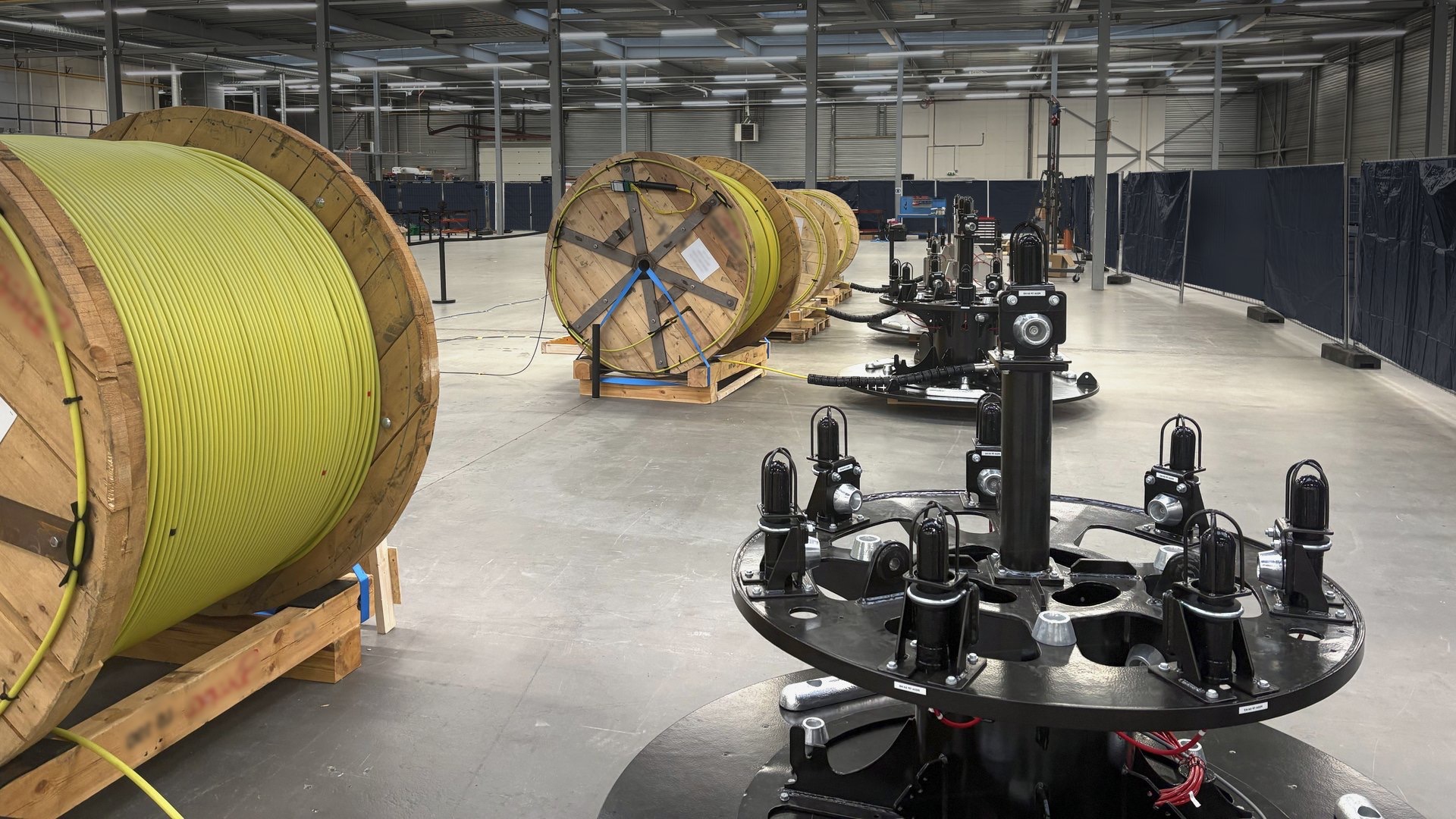
The new capital goes into manufacturing.
FORWARD.one, Value Creation Capital, SET Ventures and JOIN Capital reinvested to scale production and international expansion. More than 100 people work on the technology today.
“We have spent years developing the most sophisticated sensing technology capable of operating in the world’s most hostile environments.”
Why light instead of electronics
Passive at the sensing point
No powered electronics where the sound is captured, so the sensor itself stays silent.
Immune to EMI
Clean data next to high-voltage equipment and in electrically noisy environments.
Scales without a power penalty
Optical multiplexing adds channels without a proportional increase in power.
Built for hostile environments
Seabed, towed at sea or inside a transformer tank, with nothing in the water to maintain.
Data into your systems
Real-time acoustic data streams to command systems or the OptiFinder platform.
ISO 9001 and ISO 27001
Quality and information security management certified by BSI.